Showing posts with label vis medicatrix naturae. Show all posts

Honoring the Past While Present in the Moment: The 2010 AANP 25th Anniversary Convention

By Karen Howard
AANP Executive Director

AANP President Carl Hangee-Bauer, ND, LAc, Executive Director Karen Howard and Board Member Bill Benda, MD, FACEP, FAAEM. Photo by Michele Hangee-Bauer.
AANP’s 25th Anniversary Celebration and Convention was everything we hoped it would be! Creative and collegial, celebratory and cerebral, composed and complete. Celebrating the Foundation of Naturopathic Medicine included the inspiration of Dr. Jared Zeff and the profound insight of Dr. Joe Pizzorno. Sandwiched in between, we were honored to hear from Dr. Josephine Briggs, Director of NCCAM. And I leave it to you, the doctors, to comment on the continuing education offered by your peers. They work hard to give you their best and enhance the care you provide to patients all over the country.  Click here to view and purchase photographs from this year's convention!

Honoring the past, while present in the moment, for the sake of generations to come – this is the heart of a naturopathic gathering with the force of the AANP Convention. Thank you to Dr. Jared Skowron and ITI for initiating our Legacy Program with the creating of a 22 minute video. It features our Past Presidents and Executive Directors, and it documents the history of the AANP’s 25 years with sincere reflection and humor.

Special recognition to our 2010 Awardees!

NDNR, Corporation of the Year, for giving voice to the entire naturopathic community in a publication known for excellence.

Dr. Susan DeLaney, recipient of The President’s Award, whose presence in her state work and her mentorship deeply reflects the principles of naturopathic medicine.

Dr. Steven Bailey, recipient of The VIS Award, our award created to honor the spirit of Dr. William Mitchell, for his work as teacher and his embodiment of The Vis Medicatrix Naturae.

Dr. Christine Girard, Physician of the Year, whose visionary work will continue to inspire for years to come, especially for the students to whom she dedicated her award.

The special moments at the convention are too numerous to document. But my special thanks to all our corporate partners who enable us to gather and support us throughout the year. Please know these companies hold your expertise and commitment to quality with the deepest respect. I offer my gratitude to The Foundations Project for their incredible timeline detailing naturopathic history. My thanks to those who took extra time to participate in the Naturopathic Coordinating Council Summit held prior to the start of the Convention. Thank you to the numerous volunteers who support the work of the AANP and all of the naturopathic agencies. For those of you who are unaware, meeting after meeting after meeting compete with continuing education every day of the convention. Our volunteers support the furtherance of our mission at the sacrifice of their individual needs.

We indeed face many challenges, and collectively we will boldly face them. The next 25 years offer much in the way of possibility. Let us step up to the challenges we face and recommit to this organization. The AANP is yours to own and cherish, so give it the support it needs to transform the world!

Letting Nature Heal

By Jacob Schor, ND, FABNO

Reading Lise’s blog just now generated a response that isn’t suitable for print that questioned what I could write that might be appropriate to follow her treatise on universal love and chronic disease.

I’ve been thinking about much more mundane matters; how cold and rainy it’s been in Denver in contrast to Portland which apparently has had a bit of a warm spell. Those sorts of things. OK, let’s try writing this AANP thing:

I was up later than I wanted to be last night following an interesting trail through PubMed. There is growing awareness that serotonin may affect bones for the worse, increasing bone loss and increasing risk of osteoporosis and fractures. The first hints appeared a decade back and have gradually accumulated over the years. At this point it’s pretty much a sure thing. Taking SSRIs in order to increase serotonin levels increases bone loss.

This new knowledge shows up as our suppliers are once again selling l-tryptophan and promoting its use to increase serotonin levels.

OK, so we should be a bit more cautious with blindly raising serotonin levels in our patients. But the bigger issue is what were we thinking in doing this in the first place? After all, we are we not supposed to be naturopaths and is not our goal supposed to be to stimulate the vital force or the vis medicatrix naturae or something along that line. What does feeding our patients with isolated chemicals, in this case l-tryptophan or 5HTP, have to do with stimulating the vis?

What we were thinking of course is that Prozac works by raising serotonin levels and sometimes makes people happier. If Prozac and l-tryptophan do kind of the same thing, well the later is more natural and seems like an ‘alternative medicine.’ The thing is that we are not ‘alternative medicine doctors.’ We did not go to ‘alternative medicine school.’ Perhaps we need to remind ourselves this once in awhile.

The more we understand about the human body, the less sure I am that I really understand anything. Serotonin is made in both the brain and the gut. L-tryptophan is converted into niacin or serotonin and can then be made into melatonin. The gut makes far more melatonin than the brain does. Serotonin and melatonin play at least several roles in the intestine, helping regulate intestinal motility, healing injury and moderating inflammation.

So though exceptionally easy to reach for a bottle of l-tryptophan or of melatonin I still wonder, is it the right thing to do? Might we get a deeper and more profound effect by taking a more ‘naturopathic’ approach? I often find myself imagining how particular patients might respond to a month of old time nature cure. If they were to spend day after day on forced hikes through the Austrian Alps, early to bed and early to rise, bathing in cold water, the whole deal, how many of their complaints might resolve without further intervention? Would this push start a more robust circadian cycle and by strengthening melatonin fluctuations not have some positive influence on serotonin production as well?

Neither we, nor our patients, often have the luxury of really testing out these imagined months away from job and family so we are left with the simple question. How best to restore normal function with the least intervention? In the end, patients don’t come to us for philosophy, they come to us for help. If a bit of an amino acid nudges a patient’s chemistry so that she sleeps better, it’s not the end of the world. Yet, few of us are satisfied that this is a cure, but it is an improvement.

Although my concerns over serotonin and bone mass are new, the questions it raises in my mind are old. Not just for our profession, but through the history of medicine. How much does the physician intervene? How much do we step back and let nature heal? Do we know enough to help nature heal? Are our theories correct or will our misinformed attempts backfire and interfere with nature’s own efforts? Or to ask the sacrilegious question, ‘Does nature really know what to do in the first place?’

As a profession we can be almost cultish in our belief in nature as an all-knowing omnipotent healer. Let me quote a respected medical writer on nature’s healing properties:
“If the organism alone is left to the task, by its own forces and without external aid, …. we then witness nothing but painful, often dangerous efforts of nature to save the individual at whatever cost, which often terminate in extinction of the earthly existence, in death….What the vital force does in these so-called crises and how it does it remains a mystery to us like all the internal operations of the organic vital economy. One thing, however, is certain: that in all these efforts more or less of the affected parts are sacrificed and destroyed in order to save the rest.... In short, the entire operation of the self-aiding power of the organism when attacked by disease displays to the observer nothing but suffering, nothing that he could or ought to imitate if he wishes to cure disease in a truly artistic manner…..

“……the unreasoning life-preserving power when left to itself in disease, which, entirely dependent as it is upon the organic laws of the body, is only capable of acting in conformity with these laws, and is not guided by reason and reflection—the crude nature, which cannot, like an intelligent surgeon, bring together the gaping lips of a wound and by their union effect a cure; which knows not how to straighten and adjust the broken ends of a bone lying far apart, ……which cannot put a ligature on a wounded artery, but in its energy causes the patient to bleed to death; which does not understand how to replace a dislocated shoulder……which in order to remove a foreign body from the cornea, destroys the entire eye by suppuration; which with all its efforts, can only liberate a strangulated hernia by gangrene of the bowel and death; and which by the metaschematisms it produces in dynamic diseases, often renders them worse than they were originally.”

-Samuel Hahnemann
Our image of this Vis that we so eagerly wish to embrace and employ to heal all patients of all things is perhaps oversimplified. Great doctors for centuries have professed and debated the nature of this ‘power’ and how best to aid and abet it.

Our image of the Vis is a conglomeration of the ideas put forth by these great practitioners, often very conflicting ideas, that in our innocence we think are all one and the same. The proponents of the Vis Medicatrix Naturae would view our interpretation of their ideas as a hodgepodge of opposing thoughts and our attempts to utilize the healing power of nature as to be inconsistent. We are justified to criticize some of these practitioners for using violent treatments on their patients justifying their actions because they were mimicking the healing power of the body when it triggers vomiting, diarrhea, ulceration and hemorrhage.

So who am I to question whether l-tryptophan is good or bad. The only thing I can say today is that current information suggests the need to balance Tryptophan use against risk of osteoporosis.

Reversing Type 2 Diabetes Using Natural Therapies

By Susan DeLaney, ND, RN

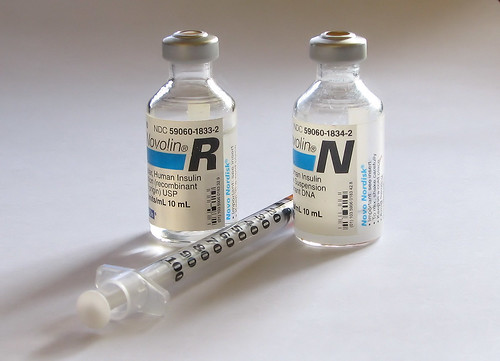
Natural remedies can help reduce or even eliminate the need for insulin in Type 2 diabetes patients.
Photo by .:[ Melissa ]:. via Flickr, used under the Creative Commons License.
Conventional medicine recommends exercise, a healthy diet and losing weight to prevent the development of Type 2 diabetes. But these same measures, along with a few supportive supplements, can also reverse the disease process. After many years of eating highly refined foods and excess sugars, one's nutrients stores are depleted. My real focus in reversing Type 2 diabetes becomes one of restoring health through nutrient rich foods. It is unfortunate that the conventional practice of medicine operates from the perspective of disease management and not the restoration of one’s health. With treatments that only manage the disease symptoms, the progression of the disease continues even with excellent control of blood sugars. Blindness, peripheral neuropathy, and heart and kidney disease are the long term consequences of a disease only held in check by medications.

In one patient's case, just eliminating all processed foods for one week, such as cereal, bread, pasta, crackers, pizza, cake, cookies--anything that made from a refined grain or sugar--reduced the need for insulin shots by 50%! He was able to maintain the reduction in his insulin doses by restricting these foods and eating high-nutrient foods such as eggs, meats and healthy fats such as butter, cheese, nuts and avocado. Beans became a daily staple of his diet, along with greens and any fruit and vegetable he desired. Daily exercise of his choice for 30 minutes each day was also initiated to improve his glucose levels.

Typically diabetics have low vitamin D levels, which is really just “the canary in the mine” indicating that they are low in all of the fat soluble vitamins such as A, D, E and K. The fat soluble vitamins (not really vitamins but pro-hormones) act together to help regulate many aspects of the immune and endocrine system. Using cod liver oil (high in vitamins A and D) along with High Vitamin Butter Oil (high in vitamin K2), these food-based supplements begin to restore these deficiencies. The diets of traditional people eating their native diets contain 10 times more fat soluble vitamins than the western diets of today. Restoring healthy fats to our diets, as well as eliminating trans fats and all refined oils that help deplete our fat vitamin stores, will help nourish the body and reduce the need for diabetic medication.

Along with the introduction of healthy fats, I also use a fermented powdered food from fruits and vegetables taken twice a day as a supplemental shake to increase the nutrient levels, speeding up the healing process. After six weeks, my patient was able to drop his insulin by 75% with a weight loss of 8 pounds. He continues to take metformin for his elevated blood sugar levels, but after 3 months is off all insulin. Along with the reduction in his insulin levels, his Hemoglobin A1C levels have dropped from 8.8 to 7.0.

Continuing his nourishing diet and supporting his system with food based supplements should totally eliminate his need for medication in the future. Restoring health prevents the development of chronic disease and reduces the need for expensive medication. It is possible to reverse, not just manage, Type 2 diabetes using natural therapies.

Humility

By Lise Alschuler, ND, FABNO
AANP Past-President (2008-2009)

Photo by a.drian via Flickr, used under the Creative Commons License.
I have come to believe that it is very hard for doctors to be truly and authentically humble. Our days are typically filled with instructing others in various ways that they can tame the unruly pathways of disease. We are, in effect, attempting to exert our control over illness. We may refer to this process more gently as empowering our patients, but, even still, our attempt at dominion over illness remains an integral part of these empowerment efforts.

This force that we exert requires that we declare unspoken allegiance to our underlying beliefs and understandings about illness and about health. And holding this allegiance together is our ego, which, with any investment of attention, quickly becomes an attachment. Here is where things get dicey. Our attachment to our ideals about healing can blind us to other possibilities, and can make us feel overly confident in our direction and position.

I would go so far as to suggest that every healer worth her salt has displayed this ego-driven behavior. It seems a natural consequence of having the will to attempt to heal. Nonetheless this determination, while perhaps necessary at times, will ultimately impede our effort. When we start to lose that edge of wondering whether what we have recommended is actually the best recommendation, or when we find ourselves talking a lot more than the people seeking our care, or when we find ourselves feeling bored or uninspired, or when we start treating diagnoses instead of people – we have succumbed to our egos. We have lost our humility in the face of disease. With that, I suspect that the healing that we each uniquely offer when we are fully present and compassionately attentive is muted, if not mutated.

I think that Bill Mitchell, ND, may have had it right when he spoke about us as being our most powerful medicine – if we don’t get in our own way. True humility - with each other, our patients and, yes, with disease, too – affords us the best opportunity to support the Vis and allow healing in.