Showing posts with label natural remedies. Show all posts

Reversing Type 2 Diabetes Using Natural Therapies

By Susan DeLaney, ND, RN

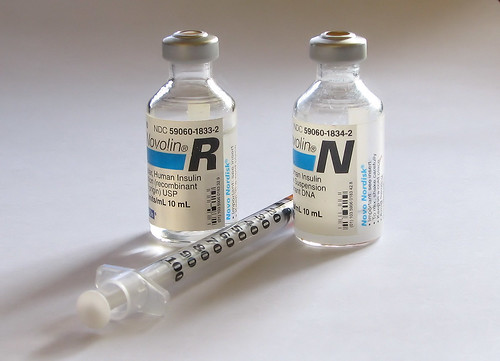
Natural remedies can help reduce or even eliminate the need for insulin in Type 2 diabetes patients.
Photo by .:[ Melissa ]:. via Flickr, used under the Creative Commons License.
Conventional medicine recommends exercise, a healthy diet and losing weight to prevent the development of Type 2 diabetes. But these same measures, along with a few supportive supplements, can also reverse the disease process. After many years of eating highly refined foods and excess sugars, one's nutrients stores are depleted. My real focus in reversing Type 2 diabetes becomes one of restoring health through nutrient rich foods. It is unfortunate that the conventional practice of medicine operates from the perspective of disease management and not the restoration of one’s health. With treatments that only manage the disease symptoms, the progression of the disease continues even with excellent control of blood sugars. Blindness, peripheral neuropathy, and heart and kidney disease are the long term consequences of a disease only held in check by medications.

In one patient's case, just eliminating all processed foods for one week, such as cereal, bread, pasta, crackers, pizza, cake, cookies--anything that made from a refined grain or sugar--reduced the need for insulin shots by 50%! He was able to maintain the reduction in his insulin doses by restricting these foods and eating high-nutrient foods such as eggs, meats and healthy fats such as butter, cheese, nuts and avocado. Beans became a daily staple of his diet, along with greens and any fruit and vegetable he desired. Daily exercise of his choice for 30 minutes each day was also initiated to improve his glucose levels.

Typically diabetics have low vitamin D levels, which is really just “the canary in the mine” indicating that they are low in all of the fat soluble vitamins such as A, D, E and K. The fat soluble vitamins (not really vitamins but pro-hormones) act together to help regulate many aspects of the immune and endocrine system. Using cod liver oil (high in vitamins A and D) along with High Vitamin Butter Oil (high in vitamin K2), these food-based supplements begin to restore these deficiencies. The diets of traditional people eating their native diets contain 10 times more fat soluble vitamins than the western diets of today. Restoring healthy fats to our diets, as well as eliminating trans fats and all refined oils that help deplete our fat vitamin stores, will help nourish the body and reduce the need for diabetic medication.

Along with the introduction of healthy fats, I also use a fermented powdered food from fruits and vegetables taken twice a day as a supplemental shake to increase the nutrient levels, speeding up the healing process. After six weeks, my patient was able to drop his insulin by 75% with a weight loss of 8 pounds. He continues to take metformin for his elevated blood sugar levels, but after 3 months is off all insulin. Along with the reduction in his insulin levels, his Hemoglobin A1C levels have dropped from 8.8 to 7.0.

Continuing his nourishing diet and supporting his system with food based supplements should totally eliminate his need for medication in the future. Restoring health prevents the development of chronic disease and reduces the need for expensive medication. It is possible to reverse, not just manage, Type 2 diabetes using natural therapies.

Valentine’s Day: Pistachio Nuts and Erectile Dysfunction

By Jacob Schor, ND, FABNO

Photo by theogeo via Flickr, used under the Creative Commons License.
Given the results of several recent studies, pistachio nuts should soon become the most prominent ingredient in Valentine’s Day meals. As our population of baby boomers age, they look less for aphrodisiacs and more for some sort of natural Viagra. Pistachios may fill this function.

Pistachios were likely the first nut to be cultivated. Remnants of pistachios found in archaeological digs in Jordan have been dated back to 6760 BCE, that’s close to 9,000 years ago. It’s thought that pistachio cultivation began in Iran, then spread through the Middle East to Turkey and then Italy. Immigrants from these areas began importing the nuts to the United States in the late 1880s. Trees were imported to the U.S. originally as ornamentals in 1854. Trees imported from France were planted in Sonoma, California, in 1875. In the early 1900s, the U.S. Department of Agriculture planted pistachio nut trees at the Plant Introduction Station in Chico, California. Still, few pistachios were grown in the U.S. Most were imported from Iran until the 1970s. It was when commercial exports from Iran became unavailable in the U.S. that significant commercial production of pistachio nuts began in the San Joaquin Valley of California.

It’s pretty well established that nuts improve lipid levels, lowering LDL and triglyceride levels and raising HDL, the good cholesterol. This is certainly true for pistachios.

Two papers on pistachio consumption and heart disease risk factors, Kay et al and Gebauer et al, published 2008 and 2010 respectively, are good examples. To briefly summarize, Kay reported in 2008 that eating two servings of pistachios per day dropped cholesterol by 8%, LDL by 11% and the non-HDL cholesterol/HDL cholesterol ratio by 10%.i In 2010, analyzing blood samples retained from Kay’s initial 2008 study, Gebauer reported that eating pistachios had had a significant impact on reducing levels of oxidized LDL.ii

An April 2010 paper by Sari et al was the first suggestion that pistachios might be useful for erectile dysfunction. This study reported that a diet high in pistachios improved lipid and blood glucose levels, but more importantly improved endothelial function. Endothelial function is important in relation to heart disease, and it’s also important in some other areas. The 32 participants in the Sari study followed a Mediterranean style diet for four weeks prior to instituting the pistachio phase. After the month of eating pistachios, low density lipoprotein had dropped by 23 % and total cholesterol by 21%. The pistachio diet significantly improved endothelium-dependent vasodilation (P=0.002, 30% relative increase).iii It should be noted that the participants followed a Mediterranean diet for a month prior to starting the pistachio phase of the study. Following a Mediterranean diet in itself might improve erectile dysfunction.iv

A recent study from just a few weeks ago, published in mid-January, focused directly on erectile dysfunction. Aldemir et al recruited 17 men with complaints of erectile dysfunction for at least a year. They were fed 100 grams (about four ounces) of pistachios each day for just three weeks. This was long enough to see a significant increase in function, a 51% increase in scores on the International Index of Erectile Function.v

Valentine’s Day is coming up fast. How many pistachio nuts do you think your patients will be willing to eat between now and then?
____________________________

i Gebauer SK, West SG, Kay CD, Alaupovic P, Bagshaw D, Kris-Etherton PM. Effects of pistachios on cardiovascular disease risk factors and potential mechanisms of action: a dose-response study. Am J Clin Nutr. 2008;88(3):651-659.


ii Kay CD, Gebauer SK, West SG, Kris-Etherton PM. Pistachios increase serum antioxidants and lower serum oxidized-LDL in hypercholesterolemic adults. J Nutr. 2010 Jun;140(6):1093-8. Epub 2010 Mar 31.


iii Sari I, Baltaci Y, Bagci C, Davutoglu V, Erel O, Celik H, et al. Effect of pistachio diet on lipid parameters, endothelial function, inflammation, and oxidative status: a prospective study. Nutrition. 2010 Apr;26(4):399-404. Epub 2009 Jul 31.


iv Esposito K, Giugliano F, Maiorino MI, Giugliano D. Dietary factors, Mediterranean diet and erectile dysfunction. J Sex Med. 2010 Jul;7(7):2338-45. Epub 2010 May 4.


v Aldemir M, Okulu E, Neşelioğlu S, Erel O, Kayıgil O. Pistachio diet improves erectile function parameters and serum lipid profiles in patients with erectile dysfunction. Int J Impot Res. 2011 Jan 13.